
Biotech Act II Needs a Lab-to-Market Chapter for Food
Europe is building a policy for biotechnology and biomanufacturing. Unless Biotech Act II connects industrial scale-up to the food-law authorisation system, the route from European science to the European market will remain incomplete.
Europe has identified the right problem.
It produces excellent science, but too often fails to convert that science into products manufactured and sold in Europe.
The Commission’s Life Sciences Strategy describes the challenge in precisely these terms. European innovators struggle to scale, regulatory frameworks remain fragmented, and promising technologies encounter unclear routes to the market. The strategy therefore calls for action across the entire innovation journey—from research and development to deployment and uptake.
The European Biotech Act is intended to help close that gap.
Its first part, proposed in December 2025, concentrates primarily on health biotechnology. It nevertheless contains measures with wider relevance, including changes concerning genetically modified microorganisms and proposals intended to improve EFSA’s pre-submission advice and the timeliness of food and feed risk assessments.
Biotech Act II is meant to go further. Led by DG GROW and focused on industrial biotechnology and biomanufacturing, it aims to strengthen the European bioindustry, reduce fragmentation and help innovative products enter and circulate within the Single Market.
That is an important opportunity.
But it will remain incomplete unless it includes a genuine lab-to-market chapter for food.
Food is present—but at the edges
The current policy framing of Biotech Act II concentrates on industrial biotechnology, bio-based products, sustainable feedstocks, manufacturing investment and lead markets.
The Commission is examining measures to stimulate demand, improve investment predictability, simplify permitting and authorisation, and reduce administrative burdens for start-ups and SMEs. It is also considering regulatory sandboxes and minimum-content requirements for certain bio-based products. The Commission’s account of the consultation places particular emphasis on reducing dependence on fossil feedstocks and accelerating the transition to sustainable materials.
Food and feed applications may ultimately fall within parts of this framework. The technologies certainly overlap. The same microorganisms, fermentation systems, biomass streams and production facilities can generate chemicals, materials, agricultural inputs, food ingredients or feed products.
Yet food is not simply another industrial end-market.
A company does not reach the food market merely because it has successfully developed a microorganism, operated a bioreactor or built a manufacturing plant. It reaches the market only after its product has been classified, assessed and authorised under the correct part of the EU food-chain acquis.
That is where the missing architecture begins to matter.
The factory is shared. The regulatory pathways are not
Biotechnology is increasingly organised around common technological platforms.
Precision fermentation, biomass fermentation, cell cultivation and engineered microorganisms can produce proteins, fats, enzymes, vitamins, flavourings, processing aids, feed ingredients, crop inputs and industrial molecules.
EU regulation, however, does not classify these products through a single biotechnology pathway. It generally regulates them according to their characteristics, intended use and legal category.
A fermentation-derived ingredient without a significant history of consumption may require authorisation under the Novel Food Regulation. A food enzyme follows the framework established by Regulation (EC) No 1332/2008. A product intended for animal nutrition may come within the Feed Additives Regulation. Where the product contains, consists of or is produced from a genetically modified organism, the rules on genetically modified food and feed may add another layer.
These distinctions exist for reasons. Different products create different exposures, uses and safety questions.
But the resulting system is difficult to navigate as a whole.
The same production platform can lead to different competent authorities, evidence requirements, application formats and decision-making procedures. Classification questions may arise before a company can even determine which studies it should commission. Changes introduced during scale-up may then affect the relevance of data generated at laboratory or pilot level.
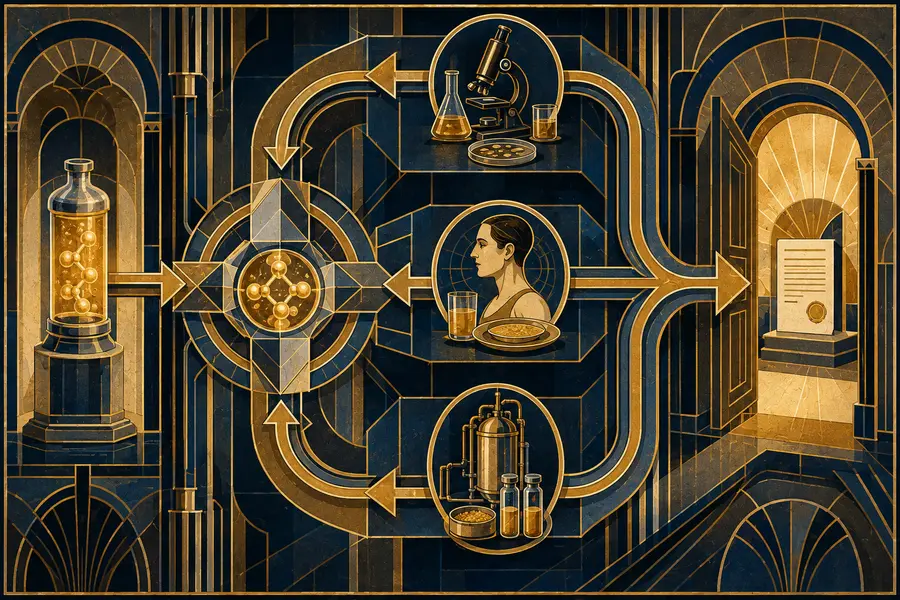
The relationship runs in both directions. A preliminary regulatory classification determines which scientific questions must be answered and which studies must be commissioned. But scientific findings can alter the classification itself: intrinsic properties, biological activity, the production organism and intended function may redirect the product into another legal pathway.
The regulatory problem is therefore not necessarily that each individual rule is unjustified.
It is that no institution takes responsibility for making the rules function as a coherent innovation pathway.
Regulatory uncertainty becomes investment uncertainty
For biotechnology companies, classification is not an abstract legal question.
It determines the studies that must be financed, the batches that must be produced, the facilities that may be used and the time before revenue becomes possible.
Investors will want to know:
- Which authorisation route applies?
- Can the intended product legally be tested at pilot scale?
- What evidence will be required?
- Will data produced for one use be recognised for another?
- Could a manufacturing change trigger further studies?
- How long is the route to an enforceable market decision?
When those questions cannot be answered early, regulatory uncertainty becomes a financing discount.
This effect is especially severe for SMEs. Larger companies may be able to finance parallel regulatory strategies, absorb delays or acquire the expertise needed to navigate several regimes. A start-up built around one production platform and a limited period of funding has far less room for error.
The consequences extend beyond the authorisation itself.
Companies decide where to conduct trials, build demonstration plants, sign manufacturing partnerships and locate intellectual property well before receiving a final market decision. If Europe supports discovery but cannot provide a credible route from scale-up to authorisation, part of the value chain will migrate elsewhere.
The laboratory may remain European.
The market—and eventually the factory—may not.
What an agri-food chapter should provide
A lab-to-market chapter would not need to turn biotechnology into a new food-law category. Nor should it displace the sector-specific assessments needed to protect human health, animal health and the environment.
Its purpose should be to connect the existing regimes.
A single regulatory entry point →
Innovators should be able to obtain an early, coordinated indication of the potentially applicable regimes, competent bodies and evidence requirements. This should bring together the Commission, EFSA and relevant national authorities rather than requiring companies to approach each part of the system separately.
Structured early dialogue →
Pre-submission engagement should begin before product design, production methods and study programmes become difficult to change. The discussion should cover classification, study design, exposure assumptions, manufacturing consistency and the regulatory consequences of scale-up.
Evidence that can travel →
Core data on identity, characterisation, production, toxicology, nutritional effects and exposure should be reusable across related procedures unless a specific legal or scientific reason requires additional evidence.
“One substance, one assessment” cannot always mean one final authorisation. It should, however, mean that the same evidence is not repeatedly generated and reassessed without justification.
Cross-regime regulatory sandboxes →
A sandbox should not exempt a food product from safety requirements. It should create a supervised environment in which authorities and developers can resolve classification questions, validate analytical methods, test traceability systems and generate dossier-quality evidence at pilot or demonstration scale.
The most useful sandbox would therefore address the interfaces between legal regimes—not simply provide temporary flexibility within one of them.
A route that connects authorisation to manufacturing →
Recognition as a strategic biotechnology project should come with an integrated plan covering regulatory development, demonstration capacity, scale-up and market access.
Funding a production facility before clarifying the status of its output does not create a lead market. It creates a better-financed bottleneck.
Better architecture is not weaker evidence
The case for integration should not be confused with a demand for lower safety standards.
Earlier regulatory dialogue can improve the evidence base. It can identify unsuitable study designs before they are implemented, reduce avoidable requests for supplementary information and ensure that manufacturing changes are properly reflected in the dossier.
Clearer allocation of responsibilities can also make risk management more visible. Scientific assessment, legal classification and political decisions about acceptable conditions of use should not be blurred into one another.
Faster decisions are credible when they result from better sequencing, better coordination and better-prepared applications.
They become less credible when speed is pursued by leaving important questions unresolved.
The real test for Biotech Act II
Europe increasingly recognises biotechnology as a strategic capability. It is investing in research, fermentation, biomanufacturing, bio-based products and scale-up capacity.
But industrial strategy cannot end at the factory gate.
For agri-food biotechnology, the decisive question is whether the output of that factory can enter a predictable, science-based and commercially viable route to the European market.
Biotech Act II does not need to collapse the food acquis into a single regulation. It does need to make the existing rules operate as a system.
Otherwise, Europe may continue to fund the discovery, train the scientists and host the first pilot plant—while the technology is financed, manufactured and commercialised elsewhere.
A serious European biotechnology policy must connect all three stages:
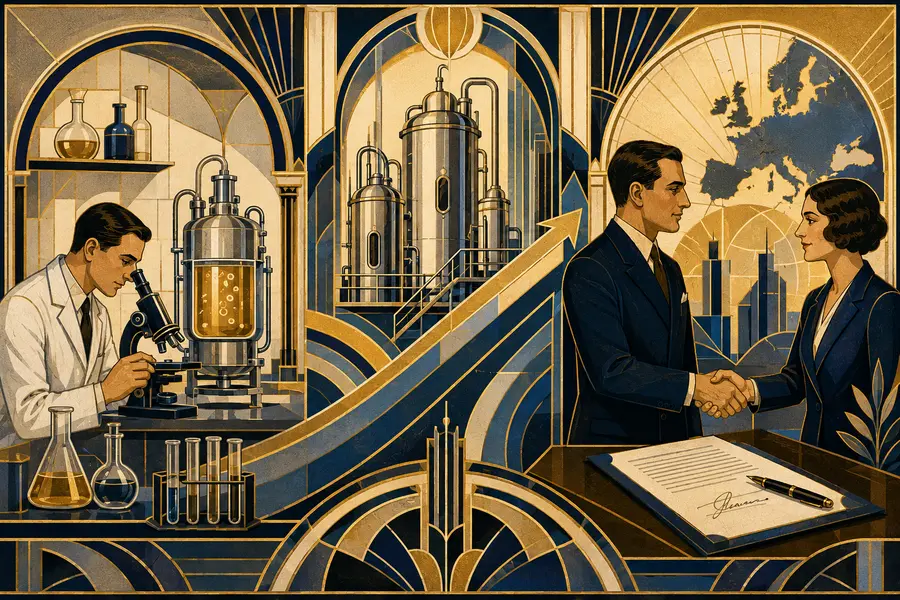
the laboratory, the factory and the market.
For more information, contact Nexum EU Strategies.
Discuss the implications for your file.
First conversations are exploratory and without obligation.
Contact Nexum