

Going bananas- The Difference that Makes the Difference in EU Novel Food
Three Article 4 outcomes on banana-derived foods show why EU novel-food status turns on the exact plant part, process, composition and use—not on the familiarity of the source alone.
Three banana ingredients. One plant. Three regulatory outcomes.
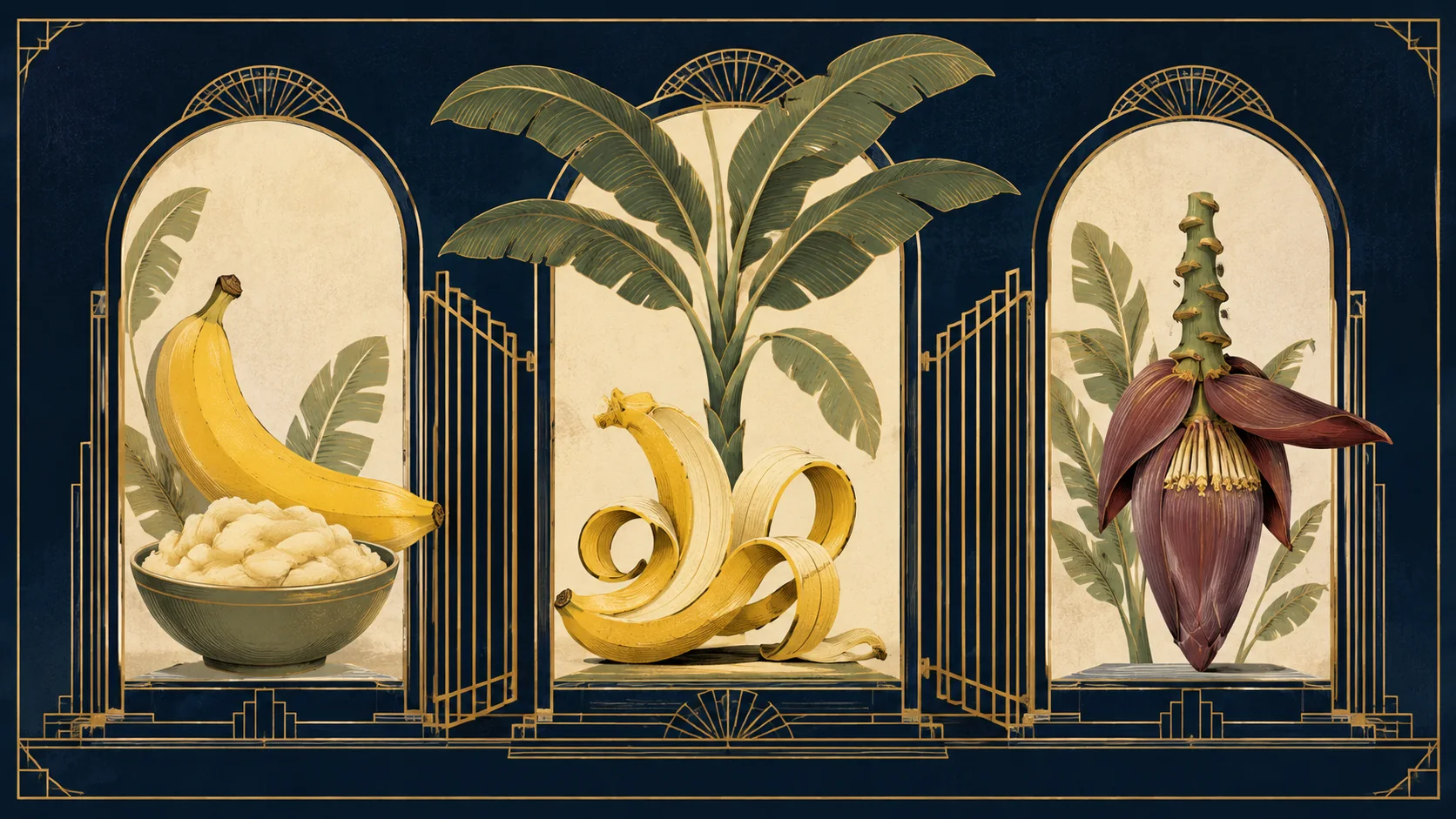
On 10 August 2026, the European Commission published the result of an Article 4 consultation handled by the Portuguese Ministry of Agriculture. Banana pulp—overripe or green—used in a non-alcoholic fermented beverage or a dehydrated fermented snack was considered not novel. Banana peel used for a dehydrated fermented snack was considered novel. Dried fermented banana blossom intended for an infusion was also considered novel.
The result looks inconsistent only if the object being classified is “banana”. It is not.
Under the EU Novel Food Regulation, the relevant object is the exact food placed on the market: the organism, the part used, the production process, the resulting composition and the proposed use. A familiar source does not confer a regulatory passport on every fraction, by-product or preparation derived from it.
That is the practical lesson of the banana decisions. Novelty follows the food, not the family name.
First, what Article 4 does—and does not do
Regulation (EU) 2015/2283 defines a novel food through two cumulative elements. The food must not have been used for human consumption to a significant degree in the Union before 15 May 1997, and it must fall within at least one of the categories listed in Article 3(2)(a).
Article 4 provides the route for resolving doubt. The food business operator must first assess novelty. If uncertainty remains, it consults the competent authority of the Member State where it intends to place the food on the market first, following the procedure in Implementing Regulation (EU) 2018/456.
An Article 4 conclusion is a classification decision. It is not a safety assessment and it is not a marketing authorisation.
“Not novel” means that the product does not require authorisation under the Novel Food Regulation on the facts assessed. The operator must still comply with the rest of EU food law. “Novel” means that the food cannot be marketed lawfully until it has been authorised and included in the Union list, unless another applicable route—such as the procedure for a traditional food from a third country—is successfully used.
Why pulp passes while peel and blossom do not
The banana outcomes separate two questions that are often blurred.
The first is the historical question: was this food, in this form or an adequately comparable form, consumed to a significant degree in the EU before 15 May 1997?
The second is the transformation question: does the production process create a food that is materially different from the established comparator?
For banana pulp, the historical starting material is conventional food. The consultation also accepted an important proposition on fermentation: fermenting a non-novel food with non-novel microorganisms through a conventional food-fermentation process would not, by itself, be expected to make the resulting food novel.
That is not a general exemption for fermented products. It is a comparator-based conclusion. Change the substrate, the microorganisms, the retained biomass, the metabolites, the degree of concentration or the resulting composition, and the analysis can change.
For peel and blossom, fermentation could not cure the prior problem. The history of consumption had not been demonstrated for those parts of the plant in the proposed foods. A conventional process applied to a novel starting material does not manufacture a pre-1997 history.
The five differences that usually decide the file
1. The exact biological material
Fruit pulp, peel, seed, leaf, bark, root and flower are not interchangeable. Evidence that Europeans consumed the fruit does not automatically establish consumption of the peel or flower.
The Commission’s recent consultation outcomes make the point repeatedly. Crithmum maritimum leaves, stems and tender shoots were considered not novel in December 2025, while its fruit was considered novel. In April 2026, Diplotaxis tenuifolia leaves and stems were considered not novel, while the conclusion for the seeds was limited to food supplements.
2. The historical comparator
The evidence must support significant consumption in the Union before the cut-off date. Availability somewhere in the world, traditional medicinal use, occasional presence, import records without evidence of human consumption, or use of a related species may not be enough.
The question is not whether the material was known. It is whether the relevant food was consumed, by whom, where, in what quantities and for what purpose.
3. The production process
A process can be new without necessarily making the food novel. The decisive provision is Article 3(2)(a)(vii): a production process not used for food production in the Union before 15 May 1997 matters where it gives rise to significant changes in composition or structure affecting nutritional value, metabolism or the level of undesirable substances.
Fermentation therefore has no automatic regulatory sign. Conventional fermentation can preserve non-novel status. Precision fermentation using a new production organism to produce a purified target molecule is a different case.
4. Composition, concentration and biological function
Extraction, hydrolysis, fractionation or enrichment can move a product away from its historical comparator. Familiar raw material is not enough if the resulting fraction has a composition, concentration or physiological role not represented in the pre-1997 diet.
The useful comparison is not “peanut versus peanut protein” or “egg versus eggshell calcium”. It is the proposed ingredient against the food for which a history can actually be demonstrated.
5. Intended use and exposure
Novel-food status can be use-specific. A substance with a pre-1997 history only in food supplements may still be novel when proposed for conventional foods under Article 3(2)(a)(x). A change in food category, dose or target population can therefore change the regulatory analysis even where the ingredient name is unchanged.
What the other recent outcomes add
The banana decisions sit within a broader set of 2026 Article 4 outcomes. Together, they show that the classification exercise is not organised around a simple natural/artificial distinction.
- Malted fava bean powder — 2 February 2026 — Not novel. A familiar food subjected to a recognisable process can remain within its historical comparator.
- Calcium salts derived from eggshells — 17 February 2026 — Novel. A familiar animal-derived source does not establish a history for a transformed mineral ingredient.
- Heat-treated soyabean fermentate — 23 February 2026 — Not novel. Traditional substrate and food microorganisms, plus comparable composition, can support continuity despite fermentation and retained inactivated biomass.
- Hydrolysed peptide extract of black bean — 4 March 2026 — Novel. Hydrolysis and selective recovery can produce a materially different ingredient even where the source food is conventional.
- Peanut protein powder — 27 May 2026 — Novel. Consumption of peanuts does not by itself prove significant pre-1997 consumption of the concentrated protein powder.
These are status outcomes, not a hierarchy of safety. A novel product may ultimately be shown to be safe and authorised. A non-novel product remains subject to the general obligation not to place unsafe food on the market.
The operational test
For a business, the useful question is not “Is this ingredient natural?” It is:
- What precisely is the food?
- What is the closest pre-1997 comparator?
- Does the evidence cover the same species, part, preparation and use?
- What does the process remove, concentrate, create, inactivate or leave behind?
- Does the resulting composition remain within the range of the comparator?
- Does the intended use materially change exposure?
This sequence also explains why an Article 4 dossier cannot be built at the end of product development. Classification depends on choices made much earlier: strain selection, feedstock, downstream purification, specifications, target concentration and proposed food categories.
Where regulatory sandboxes enter the discussion
The Commission’s proposed European Biotech Act I, COM(2025) 1022 would introduce regulatory sandboxes into EU food law. The model is a controlled, time-limited environment in which an innovative product or method can be developed, tested and validated under regulatory supervision.
But the boundary matters: the Commission proposal excludes foods falling under the Novel Food Regulation from the food sandbox. The very products most likely to need an adaptive evidence pathway therefore remain outside it under the proposal as drafted.
Biotech Act II is a separate initiative. As of 19 August 2026, the Commission has completed a call for evidence and is preparing a proposal focused on industrial biotechnology and biomanufacturing. The Commission’s May 2026 description refers to an enabling environment, lead markets and greater predictability for investment. It does not yet establish a novel-food sandbox.
That distinction should discipline the debate. A sandbox for novel foods is a plausible policy option. It is not current law, and it is not yet a settled element of Biotech Act II.
What if the sandbox had applied to the banana cases?
Applied retroactively, a sandbox would probably not have changed the three classifications.
The pulp products would still have been not novel because the decisive evidence already supported continuity: conventional food, non-novel microorganisms and a conventional fermentation process without a material departure from the comparator.
The peel and blossom products would still have been novel because supervised experimentation in 2026 cannot supply evidence of significant EU consumption before 15 May 1997.
The practical difference would have appeared after classification. Instead of confronting a binary sequence—classify first, then assemble a full authorisation dossier—the developer and authorities could have agreed a controlled evidence plan earlier. Pilot batches could have tested compositional variability. Exposure assumptions could have been calibrated against the intended portion and food category. Data requirements could have been adjusted to the actual uncertainties rather than to a generic dossier template.
That would not lower the safety standard. It could lower the cost of discovering too late that the evidence programme answered the wrong question.
The policy choice behind Biotech Act II
The novel-food debate is therefore not mainly about replacing authorisation with experimentation. It is about whether supervised experimentation should become part of the route to authorisation.
A credible sandbox would require tight boundaries:
- no unrestricted commercial placement before authorisation;
- prior agreement on the question being tested and the evidence to be generated;
- defined participants, quantities, sites, duration and consumer protections;
- traceability, monitoring, stop conditions and liability;
- public reporting of regulatory learning without disclosing protected know-how;
- no presumption that successful participation guarantees authorisation.
Designed this way, a sandbox would not weaken the Novel Food Regulation’s gate. It would make the route to that gate more iterative, evidence-oriented and predictable.
The alternative is the current asymmetry. EU policy asks biotechnology companies to innovate, scale and remain in Europe, while the proposed food sandbox excludes the category into which many of their products are most likely to fall.
Biotech Act II offers an opportunity to address that gap. Whether the Commission will do so remains open.
The practical conclusion
The banana decisions do not establish that fermentation is non-novel. They establish something narrower and more useful: a conventional process does not necessarily make a conventional food novel, while processing cannot compensate for the absence of history for the material being processed.
For innovators, the regulatory unit of analysis must be fixed early and described precisely. The species is only the beginning. The plant part, process, microorganism, resulting composition and intended use may each be the difference that makes the difference.
For policymakers, the same cases expose the limit of a sandbox that stops where the Novel Food Regulation begins.
The future question is not whether novel foods should avoid authorisation. It is whether Europe can create a supervised route that helps innovators and regulators build the right evidence before time and capital are irreversibly committed.
This article reflects the legal and policy position as at 19 August 2026. Article 4 outcomes are fact-specific and should not be treated as determinations for products with different specifications, processes or uses.
Do you want to learn more? Contact Nexum EU Strategies.
Sources
- European Commission, Consultation process on novel food status.
- Portuguese Ministry of Agriculture, Article 4 consultation outcome on banana-derived ingredients.
- Food Safety Authority of Ireland, Article 4 outcome on heat-treated soyabean fermentate.
- European Commission, Novel Food overview and authorisation procedure.
- EFSA, Updated guidance for novel-food safety assessments.
- European Commission, European Biotech Act I proposal.
- European Commission, Biotech Act II call for evidence.
Discuss the implications for your file.
First conversations are exploratory and without obligation.
Contact Nexum